
Stories in Volume 19, Issue 2 — January-March 2008
 United Nations
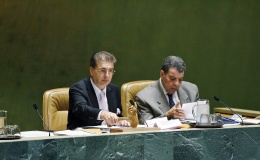
At the United Nations, a closer collaboration with religionsFrom the Alliance of Civilizations to resolutions passed by the General Assembly, the UN is forging new partnerships with religions and religious communities UNITED NATIONS — With words like “peace,” “dialogue,” and “cooperation” salted through its agenda, the program... Read more |
|
Perspective
Perspective: Eradicating Poverty: Moving Forward as OneThe crisis of global poverty has, at long last, been accorded a high priority on the international agenda. Yet as renewed pledges for action pour in from governments, a feeling of rudderlessness looms. The mechanisms of poverty eradication have long been defined in... Read more |
 Development
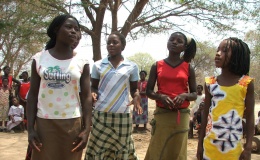
In Zambia, young teenagers pull together in service programMore than 2,000 “junior youth” of all backgrounds are involved in a new program that teaches both cognitive skills and moral development. Community leaders say an emphasis on service to others is yielding tangible results. SINAZONGWE DISTRICT, Zambia — The Tonga tribe... Read more |
|
Environment
In Canada, concern about the impact of global warming on the ArcticOTTAWA — By many accounts, global warming will have the greatest impact on the Arctic. In summer 2007, for example, scientists announced that the Arctic ice pack had retreated further than in any year since satellites began tracking the ice sheet. So it was quite timely... Read more |
|
Human Rights
UN General Assembly expresses “deep concern” about human rights in IranUNITED NATIONS — For the 20th time since 1985, the United Nations General Assembly has adopted a resolution expressing “deep concern” about human rights violations in Iran. Passed on 18 December 2007 by a final vote of 73 to 53, with 55 abstentions, the resolution took... Read more |
 Human Rights
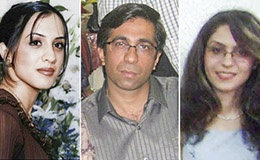
In Iran, three are unjustly imprisoned for helping underprivileged childrenGENEVA — The idea was to help poor children, not land in jail. But prison time was the result for three Bahá’ís in the Iranian city of Shiraz after they helped start social service projects to help underprivileged children and youth. Haleh Rouhi, 29, Raha Sabet, 33,... Read more |
|
Human Rights
Egypt lower court rules in favor of Baha'is, opening door to ID card solutionCAIRO — In a victory for religious freedom, a lower administrative court has ruled in favor of the plaintiffs in two lawsuits that sought to resolve the government’s contradictory policy on religious affiliation and identification papers. In a ruling on 29 January 2008,... Read more |
 Women
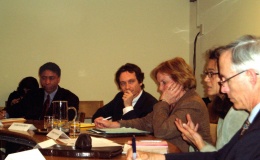
Violence against women needs global attention, says panel at the United NationsUNITED NATIONS — Government and civil society representatives called for renewed attention to the issue of preventing violence against women in a panel discussion here in December. Organized by the Bahá’í International Community (BIC) and the Christian Children’s Fund in... Read more |
|
In Brief
Baha'i International Community launches two new Web sitesNEW YORK — The Bahá’í International Community has two new Web sites — one about activities of the BIC’s United Nations Office and another to showcase historic photographs related to the life of Bahá’u’lláh. The Web site for the BIC’s United Nations Office is at www.bic.... Read more |
 Review
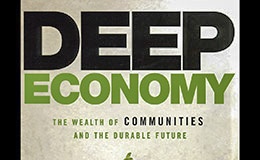
Act locally, think globally, revisitedDeep Economy: The Wealth of Communities and the Durable Future By Bill McKibben Times Books / Henry Holt and Company New York At the heart of Bill McKibben’s new book is the contrarian idea that rapid and widespread economic growth is not the key to global well-being... Read more |