At the intersection of faith and feminism, a new discourse emerges at the UN
 NEW YORK— Around the world, the high cost of gender inequality can be seen in all cultures and societies.
Violence against women is pervasive, affecting more than one-third of women worldwide, while women almost everywhere are paid less for doing the same jobs as men. And although progress has been made in closing the gender gap in schools, girls still lag behind boys in access to education, especially in early adolescence and situations of extreme poverty.
Religious traditions and messages have had a substantial role in perpetuating these inequalities — and in ameliorating them.
On the one hand, traditional religious beliefs or interpretations have been used to repress women, keep them in subservient roles, restrict their movement, or limit their role as leaders. The examples are almost too numerous to mention.
On the other hand, many women and men have found religious messages on equality, solidarity, and justice to be powerful factors in motivating them to work for change. A number of early feminists, for example, cited religious messages as one source of inspiration. And in many countries, faith-based organizations provide critical health and educational services to women and girls.
Whether one is a believer or not, religion unquestionably plays a powerful role in society as a whole, touching the lives of nearly everyone.
“Religious groups are in our view one of the most important influences of social and cultural norms,” said Lakshmi Puri, the Deputy Executive Director of UN Women. “And social and cultural norms present some of the strongest barriers to gender equality, to ending discrimination, to ending violence against women.”
The gap between faith and feminism
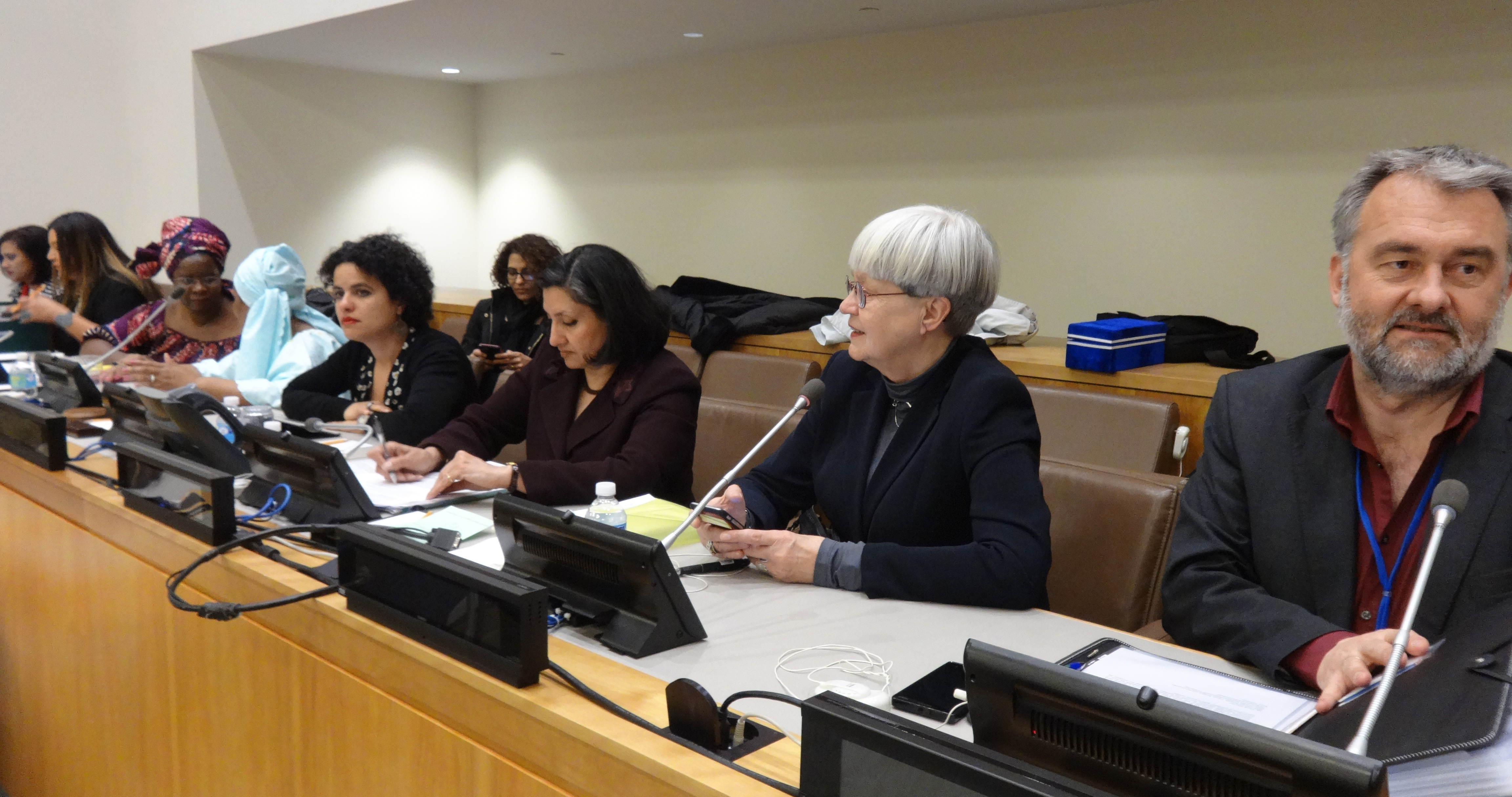 For many years, there seemed to be a dichotomy between feminist groups and women involved in faith-based organizations. Feminists often saw religion and religious leaders as enemies of progressive ideas on reproductive rights, female genital mutilation, or early childhood marriage, whereas women of faith sometimes felt torn as they pursued equality but also tried to live up to or support the dictates of their religious traditions. Somewhere in the middle were UN agencies, which sought to work with everyone but which also perceived some religious practices as violating human rights, especially the rights of women and girls.
“The divide between faith and feminism has been so long unexamined, and the two categories were seen as completely contrary and unbridgeable,” said Maha Marouan, an associate professor of African American and Women’s Studies at Pennsylvania State University.
“The feminist movement has traditionally been very secular and looks at religion as an oppressive force in women’s lives, while faith-based communities often shied away from feminism because they see it as a radical ideology,” she said.
Over the last few years, however, a new discourse on the subject has become more prominent, making greater efforts to bring together feminists and faith groups, especially those composed of religious women.
At the forefront of this effort has been a loose coalition of non-governmental organizations in New York, which has established a Civil Society Working Group of Faith-Based Organizations and Feminists for Gender Equality — known more concisely as the Faith and Feminism Working Group.
Founded in 2015 after a series of meetings at the New York office of the Bahá’í International Community, the Faith and Feminism Working Group broadly seeks “to replace the often confrontational dynamic between secular and faith-based proponents of gender equality,” according to a statement the Group delivered to the 2016 UN Commission on the Status of Women.
“Such tensions are often rooted in conceptions of culture and are driven by broader political agendas, geopolitical realities and where religion is instrumentalized and political fragilities are exploited,” the statement continues.
It went on to recommend that “the United Nations, the commission, academics and civil society reflect and consult on the need for religious and secular actors to work together to create a narrative that encompasses the ideals inherent in respective worldviews — a narrative that focuses on our common humanity, on justice and the establishment of peace.”
Three lines of action
The Working Group has organized itself along three general lines of action: 1) to advocate for this new conception of faith and feminism at the UN and in other international forums; 2) to develop a non-patriarchal, multi-religious narrative that can help replace the patriarchal narrative that currently dominates; and, 3) to examine how the media shapes our concept of gender-based issues — and how it can be used to promote a new conception of faith and feminism.
Toward those goals, the Working Group sponsored a series of brown-bag lunches at the 2016 UN Commission on the Status of Women (CSW). These brought together a variety of participants to discuss topics like “Faith and Feminist Advocacy at the UN” and “Feminine Religious Narrative — Where Art Thou?”.
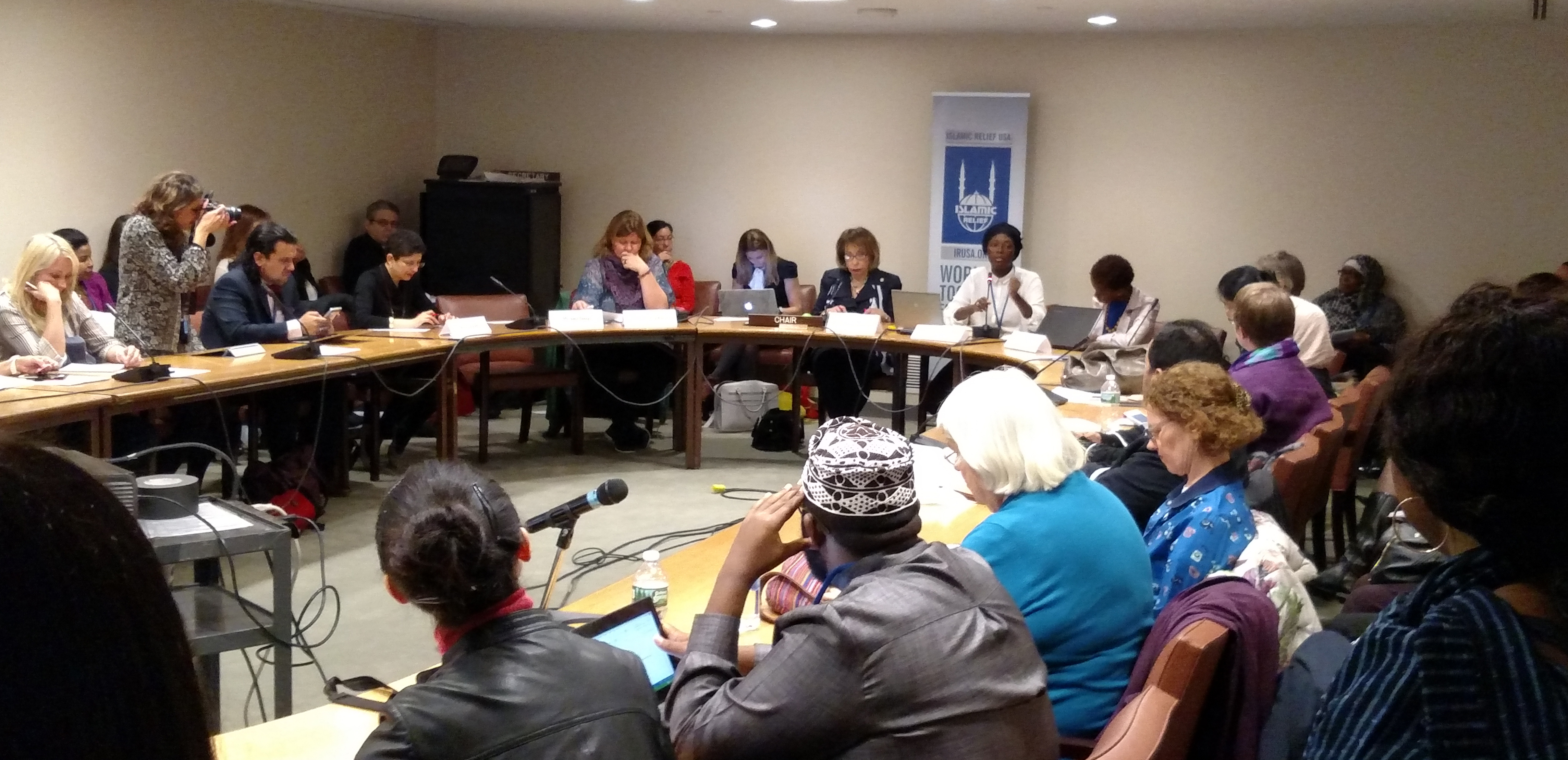 “The CSW brings together over 8,000 women from all over the world each year,” said Christine Mangale, Program Coordinator with the Lutheran Office for World Community, a member of the Working Group’s steering committee. “These lunch discussions were to expand the viewpoint. And we were adding membership to the group as the year went by.”
For 2017, the Working Group planned to have more side events at the CSW — and it has submitted a new statement that suggests a series of concrete actions the international community can take to “challenge religious practices” that undermine women’s contributions to “vibrant” economies.
The suggestions include supporting “feminist faith leaders, theologians and faith-based organizations to challenge religious interpretations that undermine women’s economic empowerment” as well as urging UN agencies to develop “faith literacy” and to help feminist faith-based organizations “hold state machinery accountable for religious fundamentalism which undermines the implementation of ratified human rights treaties and conventions.”
Ms. Mangale said the Working Group also hopes to work in spaces like the High Level Political Forum (HLPF), the UN General Assembly’s Third Committee, and the Human Rights Council. “Our goal is to show that there is no disconnect between women of faith and secular groups when it comes to human rights,” she said.
Support from UN agencies
UN agencies have given strong support to the new coalition. The United Nations Population Fund (UNFPA) has long dealt with the intersection of faith and feminism because of its decades of work on female reproductive rights and related issues, said Azza Karam, a senior advisor on culture at the agency, and support for the new conversation has emerged naturally.
“I may not see eye to eye with my Islamic colleague on Sharia law as regards inheritance, but the fact of the matter is that we both think FGM [Female Genital Mutilation] is completely wrong. And we worked together,” said Dr. Karam.
UN Women has also been very supportive. At the 2016 CSW, for example, UN Women convened, with World YWCA, a well-attended discussion on religion and gender equality in relation to the implementation of Agenda 2030.
“We see faith-based organizations as a critical partner,” said UN Women Executive Director Phumzile Mlambo-Ngcuka in opening remarks at the discussion. “We know that faith-based institutions have a role to play, in some cases sustaining that which makes patriarchy to thrive, or, where there is a progressive agenda, faith-based organizations play a critical role in challenging the prejudices, and therefore in changing the narrative.”
Omair Paul, the UN representative of Muslims for Progressive Values (MPV), who is a member of the Working Group, said he believes the development of alternative narratives can play a critical role at the United Nations when “certain states invoke cultural relativism or other systems of religious law to justify pushing back on women’s civil, economic, political, social or cultural rights.”
“One of the projects we are working on is the production of information graphics that could be disseminated to diplomats and others in negotiating rooms to equip them with an alternative narrative, so they have a better understanding of how religious arguments are used against women, and what the religions actually say.”
Origins of the Working Group
Developing such new narratives was one among many themes that were identified early on in a series of conversations on the intersection of religion and gender that were held at the offices of the Bahá’í International Community in New York in late 2014 and early 2015.
Co-sponsored with UN Women, UNFPA, and World YWCA, the series comprised four lunchtime events that sought to track the impact of religious messages on women and girls across the span of their lives. They drew a range of participants, including diplomats, UN agency officials, and representatives of civil society. Many participants laterjoined the Faith and Feminism Working Group.
At one of these meetings, Janet Karim, then the first secretary for social affairs of the Permanent Mission of Malawi to the UN, explained exactly how such new narratives can be created. She spoke from personal experience of the tensions she saw in Malawi some years before, when some religious groups sought to block new national laws promoting equality of women and men.
“Quotes from religious books such as the Bible were often quoted as proof that women were not meant to be leaders,” said Ms. Karim.
But, she said, they were able to provide their own narrative in support of equality. “When Jesus rose from the dead, the first people he met were women,” she said. “So that should show that God is fair.”
